French study finds prehospital fingerstick troponin ruled out NSTEMI in 7.1% of patients
Clinicians in 10 French mobile intensive care units were blinded to the Atellica VTLi results, and the authors say unavailable or uninterpretable readings limited feasibility.
Key takeaways
- A study published November 10, 2026, tested fingerstick high-sensitivity troponin I in 10 French mobile intensive care units across four EMS systems.
- Of 659 adults with acute chest pain, 71 (10.8%) were diagnosed with NSTEMI at hospital discharge, and the capillary test had an AUC of 0.83.
- A rule-out cutoff below 2.2 ng/L flagged 7.1% of patients with a negative predictive value of 1.00; a rule-in cutoff above 43.6 ng/L flagged 6.5% with a positive predictive value of 0.65.
- Treating clinicians never saw the troponin result, and the authors report that unavailable or uninterpretable measurements challenged feasibility in routine practice.
- For crews: the device studied was the Atellica VTLi point-of-care analyzer on capillary samples; the records do not describe any US deployment or protocol.
A study published November 10, 2026, in the European Journal of Emergency Medicine reports on fingerstick high-sensitivity cardiac troponin I testing performed by French mobile intensive care units before patients reached the hospital [1]. The trial, called VALIDATE, enrolled adults with acute chest pain and compared the prehospital capillary result with the diagnosis of non-ST-elevation myocardial infarction (NSTEMI) at hospital discharge [1].
Among 659 patients in the primary analysis, 71 (10.8%) had NSTEMI, according to the PubMed record [1]. The capillary test produced an area under the receiver operating characteristic curve of 0.83, with a 95% confidence interval of 0.78 to 0.88 [1]. The authors described this as "good diagnostic performance" [1].
The study was led by Jérémy Guenezan, with Pierre Hausfater listed as senior author, and included investigators from several French institutions [2]. The authors conclude that "Further external validation is warranted before implementation in prehospital diagnostic pathways" [1].
What the records show
VALIDATE was a prospective, multicenter diagnostic accuracy study [1]. It ran in four French emergency medical service systems, using 10 mobile intensive care units [1]. Adults presenting with acute chest pain were eligible [1].
The index test was a prehospital high-sensitivity cardiac troponin I measurement on a capillary blood sample, run on a point-of-care device identified as the Atellica VTLi [1]. Treating clinicians were blinded to the result, meaning the test did not change care during the study [1]. The reference standard was the NSTEMI diagnosis at hospital discharge [1].
The authors set clinically relevant thresholds in advance, based on what the abstract calls "predefined safety criteria" [1]. The results at those cutoffs were:
- Rule-out: a capillary value below 2.2 ng/L identified 7.1% of patients, with a negative predictive value of 1.00 (95% CI 0.92 to 1.00) [1].
- Rule-in: a capillary value above 43.6 ng/L identified 6.5% of patients, with a positive predictive value of 0.65 (95% CI 0.51 to 0.79) [1].
In a predefined sensitivity analysis, venous blood tested for high-sensitivity troponin I performed similarly, with an AUC of 0.84 (95% CI 0.79 to 0.89) [1].
The abstract also reports a practical limitation. Feasibility in routine practice, the authors wrote, "was challenged by unavailable or uninterpretable measurements" [1]. The abstract does not give the number of such failed measurements.
Why it matters for EMS
High-sensitivity troponin is the central blood test for ruling NSTEMI in or out in the emergency department [1]. The authors argue that moving the test into the ambulance could speed up decisions about where a patient goes and what happens next [1]. VALIDATE is one of the few prospective, blinded tests of that idea using capillary blood, which is easier to collect in the field than a venous draw [1].
The numbers put limits on the concept as studied. Only 7.1% of patients fell under the rule-out cutoff and only 6.5% exceeded the rule-in cutoff, so the large majority landed in the intermediate zone where a single prehospital value did not classify them [1]. The rule-out group had no missed NSTEMI cases in this cohort, but the confidence interval for that negative predictive value extends down to 0.92 [1]. The rule-in cutoff was wrong roughly one time in three, with a positive predictive value of 0.65 [1].
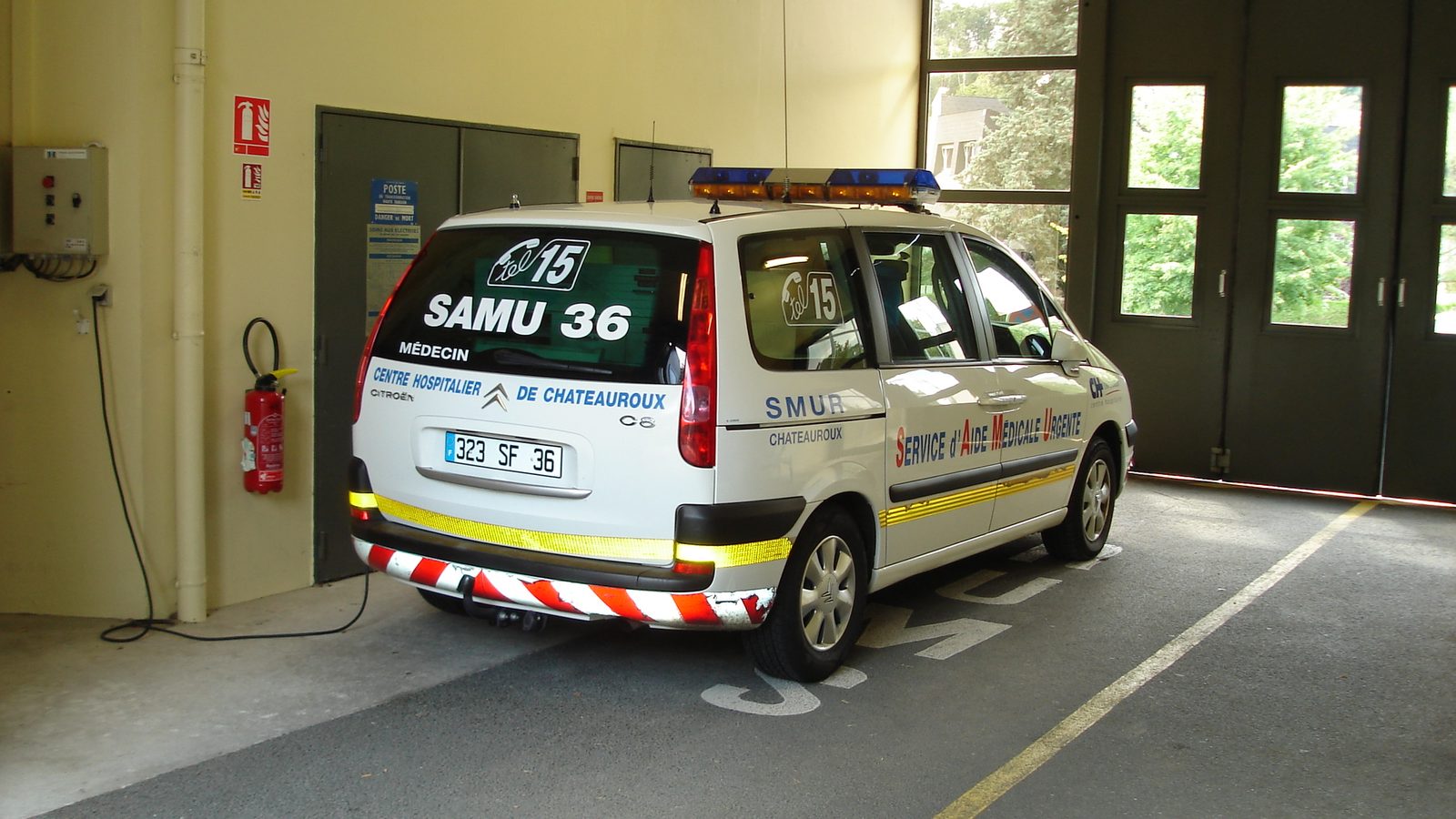
The study setting also differs from most US systems. French mobile intensive care units are physician-staffed, and the study was conducted entirely within that model [1]. The records do not describe any paramedic-only deployment of the device. EMS clinicians follow local protocols and medical direction.
What the records do not tell us
- Failure rate: the abstract says measurements were sometimes unavailable or uninterpretable but does not state how many, or why [1].
- Patient outcomes: because clinicians were blinded, the study measured diagnostic accuracy only. It does not show whether using the result would have changed transport destinations, treatment times or outcomes [1].
- Time from symptom onset: the abstract does not report when samples were drawn relative to symptom onset, which affects troponin values.
- Exclusions: the abstract does not say how many patients were screened, excluded or lost before the 659 in the primary analysis [1].
- US applicability: the records contain no US data, no regulatory status for the device in prehospital use, and no cost information.
- Full paper: only the abstract was available in the packet. The full-text article, at the DOI listed below, may contain details not covered here [2].
What to watch
The authors state that external validation should come before the test is built into prehospital diagnostic pathways [1]. The records do not name a follow-on study, a timeline or a sponsor for that work.
Questions readers ask
What did the VALIDATE study test?
VALIDATE measured high-sensitivity cardiac troponin I on capillary blood samples in the prehospital setting, using the Atellica VTLi point-of-care device, in adults with acute chest pain. The result was compared with the diagnosis of NSTEMI at hospital discharge.
How accurate was prehospital capillary troponin for NSTEMI?
Among 659 patients, 71 (10.8%) had NSTEMI. The capillary test had an area under the curve of 0.83 (95% CI 0.78 to 0.88). Venous samples performed similarly with an AUC of 0.84.
What troponin cutoffs did the study use to rule NSTEMI in or out?
A rule-out threshold below 2.2 ng/L identified 7.1% of patients with a negative predictive value of 1.00. A rule-in threshold above 43.6 ng/L identified 6.5% of patients with a positive predictive value of 0.65.
Where was the VALIDATE prehospital troponin study done?
The study ran in four French emergency medical service systems using 10 mobile intensive care units. Treating clinicians were blinded to the troponin results.
Sources
- PubMed record: Diagnostic accuracy of prehospital capillary high-sensitivity cardiac troponin I in patients with acute chest pain: the prospective multicenter VALIDATE study (European Journal of Emergency Medicine, November 10, 2026) — European journal of emergency medicine : official journal of the European Society for Emergency Medicine (2026-11-10). pubmed.ncbi.nlm.nih.gov/43007266/
- Full article via DOI: 10.1097/MEJ.0000000000001391 (author list and structured abstract) — doi.org. doi.org/10.1097/MEJ.0000000000001391
This is news, not medical advice. EMS clinicians: follow your local protocols and medical direction.